Route 66 History
 |
Route 66 was one of the United States' first continuous stretches of paved highway, and served as a major path for those who migrated to the West.
During the Dust Bowl era of the 1930s, the diagonal course of the Route 66 was the primary route for migrating farm workers from the Midwest to California. The migration continued during World War II due to job availability in California.
It linked small, rural towns to larger cities, and markets. The fact that it covered mainly flat areas and featured moderate year-round weather made it an attractive route for travelers, and truckers. During this time, it also became one of the key routes for moving military equipment across the country.
Creation of the Route and Its Early Years
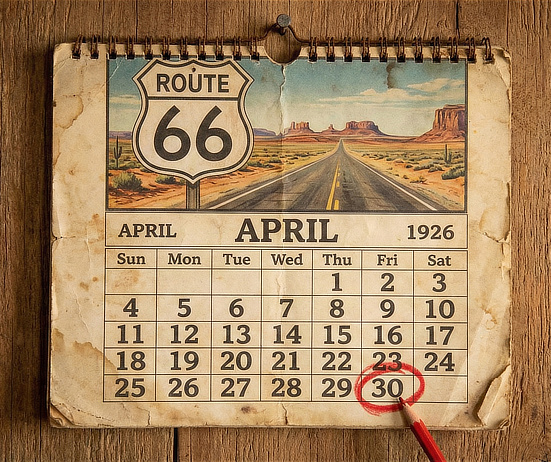
The numerical route designation "66" was assigned to the Chicago-to-Los Angeles route on April 30, 1926. "The Mother Road" was officially established on November 11, 1926, and ultimately stretched 2,448 miles (3,940 kilometers) from Chicago to Los Angeles. Its supporters originally sought the Route 60 designation, and after opposition from several states, Route 62. But it finally, officially became Route 66.
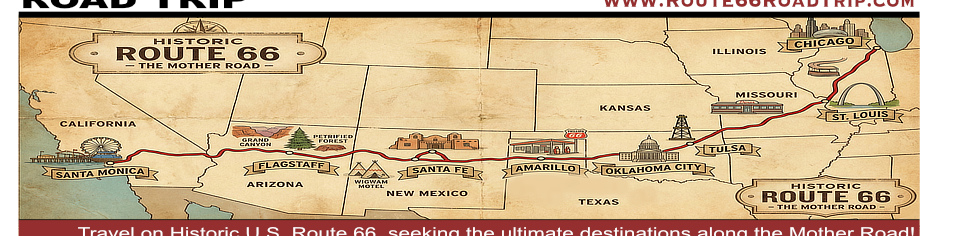
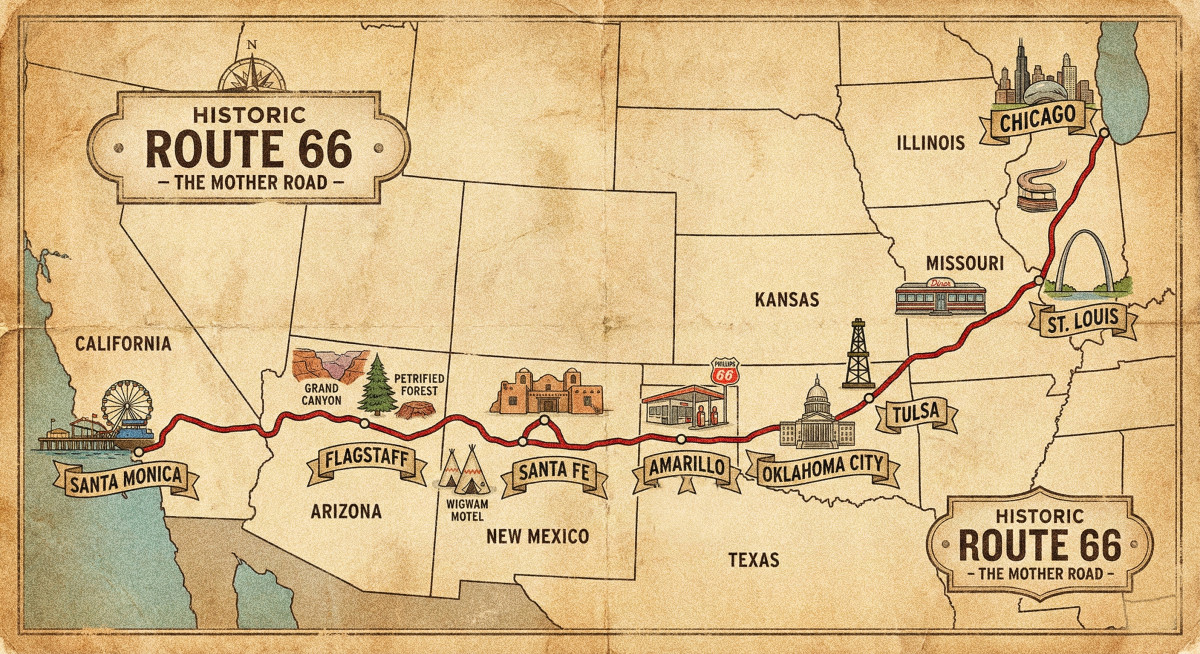
From its beginning in downtown Chicago, Route 66 headed southwest through Illinois and Missouri, and a small section of southeast Kansas. From there it turned in a more westward direction through Oklahoma and Texas, with the final stretches in New Mexico and Arizona before its termination point in Los Angeles. It was envisioned as an "all weather" roadway, running south of the typical snow/ice of northern states, and north of most of the heat of the southern states.
 |
Alignments of the road changed often over the years, as improved sections of highway were constructed. In the early years many sections connected only one small town to the next, and had no official federal route number. Over time the route was formalized as Federal Highway numbered as "U.S. 66".
At Continental Divide, New Mexico, Route 66 reached its highest point, with an elevation of just over 7,200 feet.
From Dirt to Pavement
It became the shortest, year-round route between the Midwest and the Pacific Coast, and was also known as "The Main Street of America" and the "Will Rogers Highway". In 1926 when it was established, only 800 miles of Route 66 were paved, the rest being graded dirt, gravel, bricks, or planks of wood. It took 11 more years before the entire road would be paved.
Due to the efforts of the U.S. Highway 66 Association, Route 66 became the first highway to be completely paved, in 1938. In the 1950s, Route 66 became the main highway for vacationers heading to Los Angeles. The traffic along Route 66 led to the opening of many "mom and pop" restaurants, motels, and service stations along the route to satisfy the needs of traveling motorists.
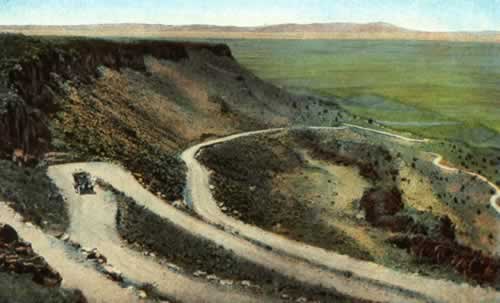
Early scenes of Route 66 in New Mexico ... before pavement!Switchbacks on Route 66 at La Bajada Hill between Santa Fe and Albuquerque |
|
 |
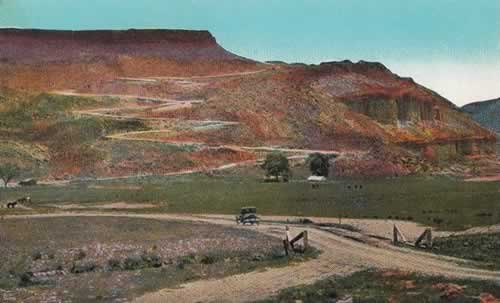 |
Who named Route 66 "The Mother Road"?
In his Pulitzer Prize-winning 1939 novel “The Grapes of Wrath,” John Steinbeck wrote a chapter about Dust Bowl migrants traveling Route 66, which he nicknamed “The Mother Road." The highway is also sometimes called "The Will Rogers Highway" and "The Main Street of America".
The Father of Route 66
Cyrus Avery was a Tulsa businessman who promoted the establishment of the Route 66 highway, earning him the nickname “Father of Route 66". In 1927, while involved in founding the U.S. Highway 66 Association, he created the Route 66 byline “The Main Street of America.”
The Lore of Route 66: The Main Street of America
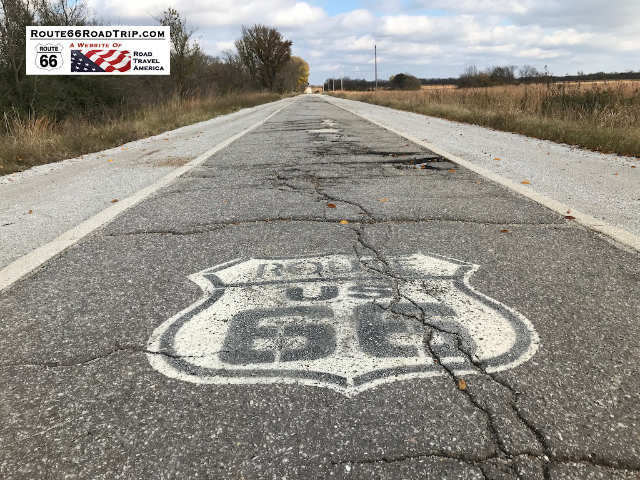 |
Route 66 became one of the most famous roads in the United States, outdistancing others such as the Lincoln Highway.
It is popular lore in movies, songs, books like "The Grapes of Wrath", and TV shows.The legendary highway was known far and wide for its variety of "mom and pop" motels, neon lights, drive-ins, quirky roadside attractions, flat tires, cars with no air conditioning, dangerous curves, steep hills, and narrow lanes.
Today, there are more than 250 buildings, bridges, road alignments and other sites along Route 66 that are listed on the National Register of Historic Places. The movie "Easy Rider" was filmed at several locations along Route 66. The movie "Thelma and Louise" also featured Route 66 references and scenes.
The popularity stuck, and continues to grow today!
How long was U.S. Route 66?
It is generally accepted that, from beginning to end in 1926, Route 66 traversed 2,448 miles, or 3,940 kilometers. However, as the route evolved over its 60 years of existence with new, improved alignments, the mileage varied over time.
Route 66 was not America's oldest or longest road, surpassed by transcontinental highways like U.S. Highway 40 and the Lincoln Highway. But it was the shortest, year-round route between the Midwest and the Pacific Coast. Route 20 is the longest U.S. highway, spanning 3,365 miles.
List of Route 66 Mileage by State (1926 Alignment)
Route 66 traverses eight states: Illinois, Missouri, Kansas, Oklahoma, Texas, New Mexico, Arizona, and California. Alignments and distances evolved over the years, but the 1926 alignment is often used as the standard.
State - Miles Illinois
- 301 TOTAL - 2,448 Miles |
It's time to stop for a "selfie"! The arch in Grants, New Mexico on Route 66 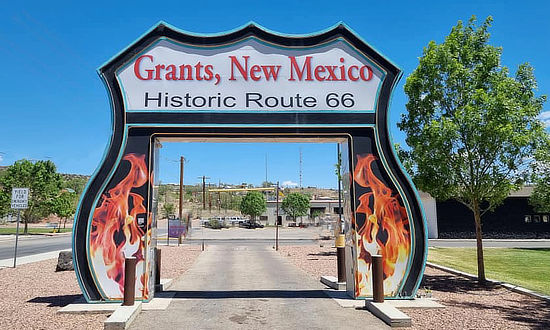 |
Route 66 Maps from Chicago to Santa Monica
Map of Historic Route 66 from Illinois to California
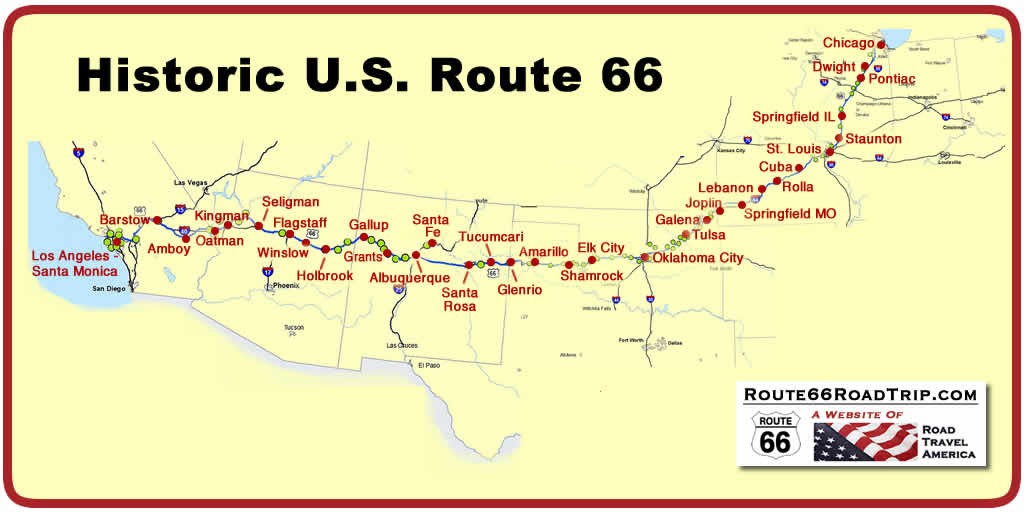
Vintage map showing the eight states along Historic U.S. Route 66 ... The Mother Road
The Demise and Decommissioning of Route 66
Route 66 underwent many improvements and realignments during its lifetime. The passage of the Federal Highway Act of 1956 sounded the death knell for the old road, and gradually segments were replaced with new, safer and faster superhighways.
Its final demise was the completion of the Interstate Highway System. The last Route 66 town by-passed by the Interstate system was Williams, Arizona, on October 13, 1984. Subsequently, U.S. Route 66 was officially removed from the United States Highway System on June 27, 1985.
Route 66 was replaced by five Interstates: I-55 southbound from Chicago, I-44 across Missouri and Oklahoma, I-40 in Oklahoma, Texas, New Mexico and Arizona, I-15 and finally I-10 into Los Angeles.
The Influence of Route 66 on the movie "Cars"
The animated movie "Cars" produced in 2006 tells the story of Route 66 through characters Lightning McQueen and Sally and their escapades at Radiator Springs, a fictionalized representation of all Route 66 towns.
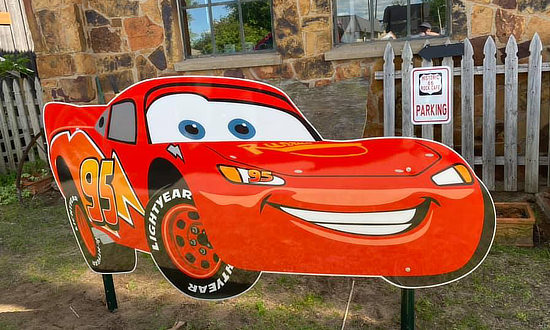 |
Sally liked to say ... "Those were the days we traveled to have a great time, not to make great time"! In the movie, Ramone's House of Body Art looks amazingly similar to the U-Drop Inn in Shamrock, Texas.
Other real-life locations that inspired parts of the movie at the Cadillac Ranch, the Wigwam Motels, and the Wagon Wheel Motel. The movie was produced by Pixar and distributed by Walt Disney Pictures.
 Read more about the movie "Cars" and its Route 66 inspirations
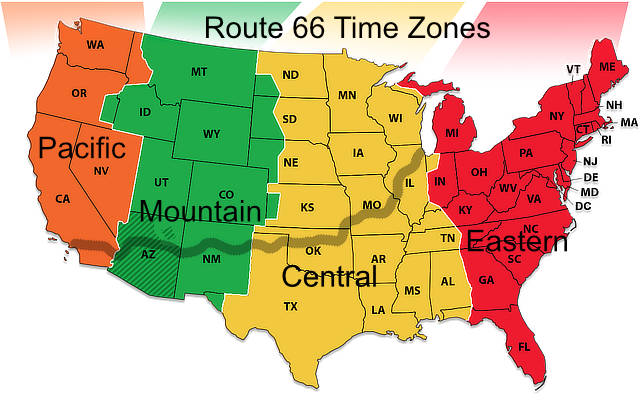
Route 66 Time Zones
Portions of Route 66 are in three time zones: Central, Mountain and Pacific, as shown in the map below. Daylight Savings Time (DST) is observed from the second Sunday in March until the first Sunday in November. Arizona does not observe DST, with the exception of the Navajo Nation, so check for local time depending on where you are in Arizona.
 |
Route 66: The TV Show
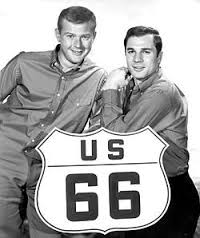 Tod and Buz (By CBS, or Screen Gems) |
A popular television show during the early 1960s bore the road's name: "Route 66". Starring George Maharis as Buz, and Martin Milner as Tod, the two young adventurers drove the road in their Chevrolet Corvette for 116 episodes.
Despite the name of the series, most episodes did NOT take place on the historic road, but in 25 different U.S. states. The show was filmed mostly on location, and became known for its cinematography. A long list of well-known actors and actresses appeared on the series.
The show ran from October, 1960, through March, 1964, and created a huge following. The interest in the show continues today by "Baby Boomers" who remember the original showings, and new generations of viewers fascinated by the show who watch it on DVD.
Read more about the Route 66 TV series ... and those Corvettes!
Route 66: The Song
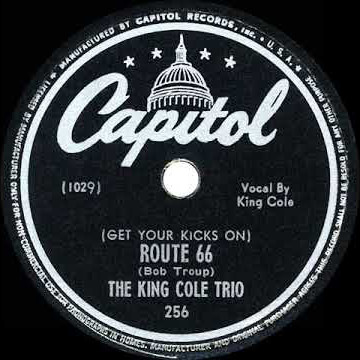 |
The song "Get Your Kicks on Route 66" was composed by songwriter Bobby Troup in 1946.
It was first recorded by Nat King Cole, and sung by other singers over the years including Chuck Berry, Perry Como, and the Rolling Stones.
If you ever plan to motor west, travel my way, take the highway that is best.
Get your kicks on Route sixty-six.
It winds from Chicago to LA, more than two thousand miles all the way.
Get your kicks on Route sixty-six.
Now you go through Saint Looey, Joplin, Missouri,
and Oklahoma City is mighty pretty.
You see Amarillo, Gallup, New Mexico, Flagstaff, Arizona.
Don't forget Winona, Kingman, Barstow, San Bernardino.
Won't you get hip to this timely tip: when you make that California trip
Get your kicks on Route sixty-six.
For the Route 66 TV series on CBS, the "Route 66 Theme" song was written by Nelson Riddle.
Read more about Route 66 songs!
Best-Selling Route 66 Books and Maps at our Amazon Store |
|
| Route 66 Travel Guide - 202 Amazing Places by Mark Watson 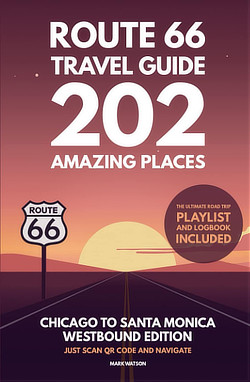 |
Route 66 Full-throttle Adventure Handbook, by Drew Knowles 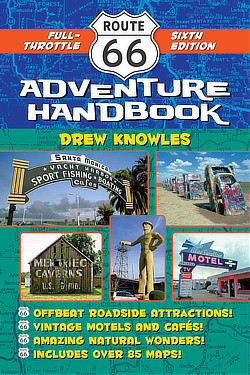 |
| EZ66 Guide for Travelers (6th Edition) by Jerry McClanahan 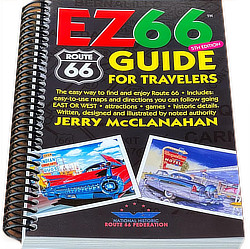 |
Rand McNally 2026 Road Atlas Large Scale Spiral Bound 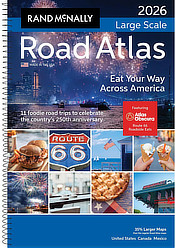 |
About These ProductsThe Route 66 Road Trip website is a participant in the Amazon Services LLC Associates Program, an affiliate advertising program designed to provide a means for sites to earn fees by advertising and linking to Amazon.com and affiliated sites. Amazon offers a commission on products sold through their affiliate links. There is no additional cost to you. |
|
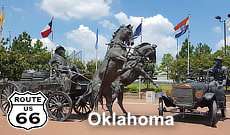
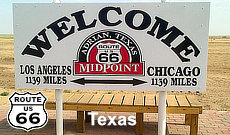
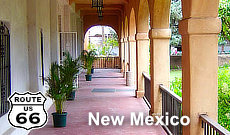
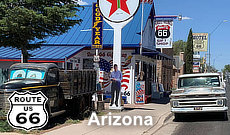
Road Trip Travel Guides for the Eight States Along Route 66
Planning a road trip on Route 66 for the Centennial in 2026? Here are the travel guides and reviews by state...
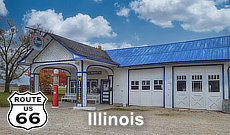 |
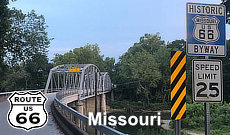 |
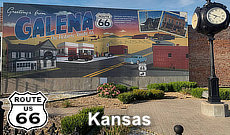 |
 |
 |
 |
 |
 |
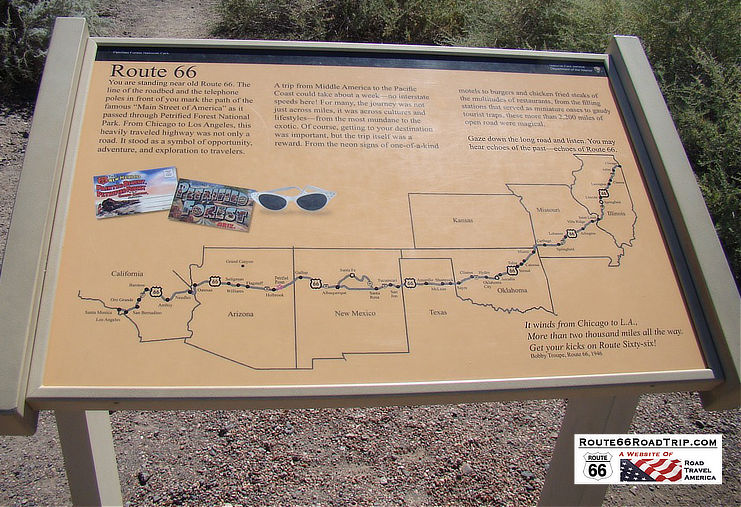
Route 66 ... Through Eight StatesShown here is signage at the Painted Desert marking the path of Route 66 through eight states, and through this area. It reads, in part ... "Gaze down the long road and listen. You may hear echoes of the past ... echoes of Route 66"
|
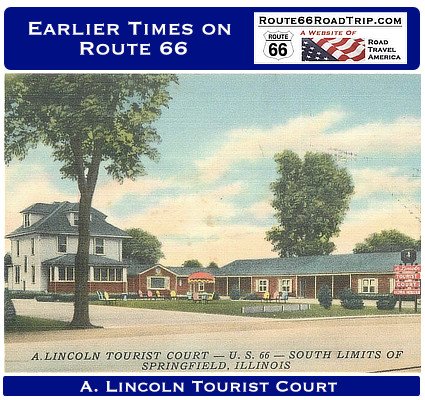
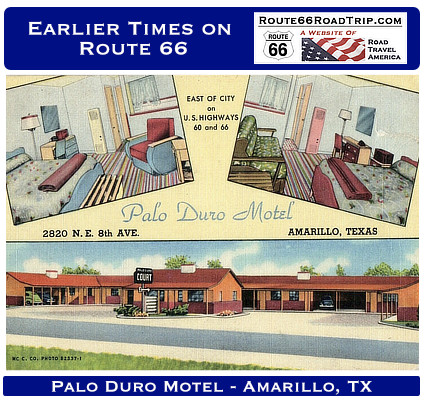
Earlier Times on Route 66
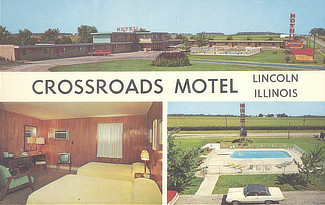
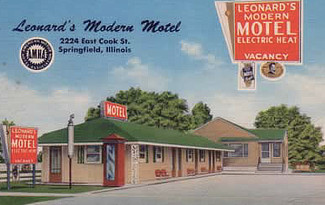
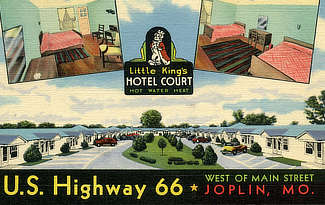
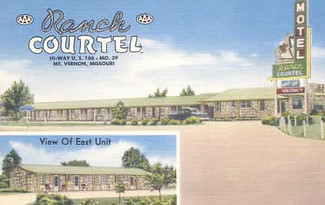
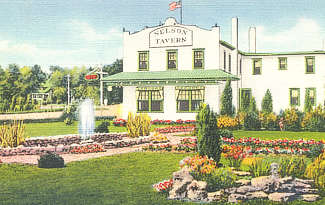
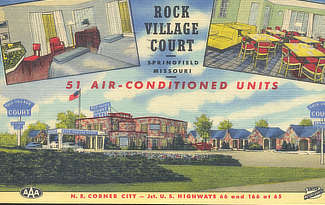
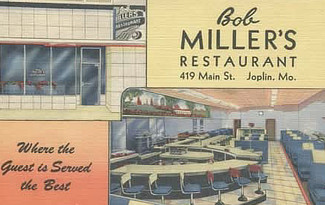
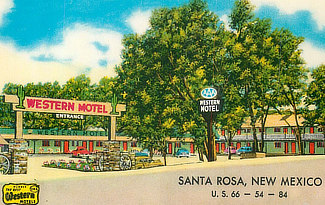
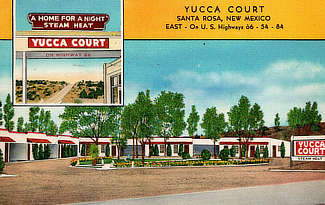
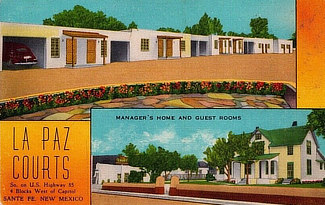
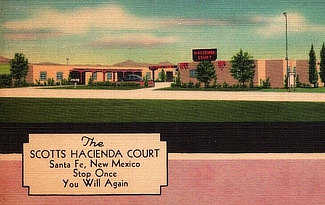
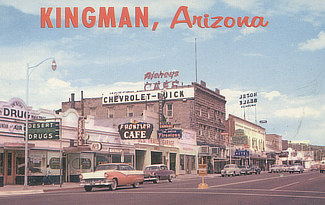
We have included below a sampling of our collection of vintage travel postcards dealing with Route 66 and the cities and towns it traversed. What was Route 66 like in its earlier years, as visitors drove across The Mother Road? What did all the service stations, motels and public buildings look like when they were new? What did the traveling public experience? We wonder such things when we travel Route 66 today. Those earlier times in the 1930s, 40s and 50s were not always captured on film. But the use of colorful postcards was common in those decades. These portray the historic road in its prime and help us to visualize, and appreciate, "earlier times" as we drive Route 66 today from Chicago to Santa Monica. |
|||
Route 66 Memories from Illinois
|
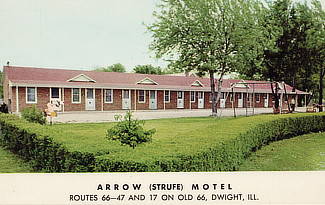
Vintage Views along Route 66 in Missouri
|
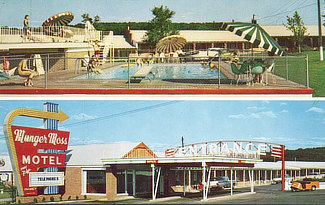
Earlier Days on U.S. Highway 66 in Oklahoma
Star Courts - Elk City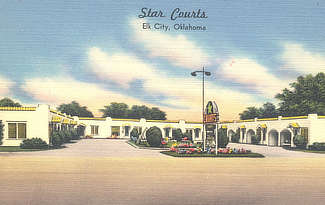 |
Cooks Court - Tulsa |
Phillips Courts - El Reno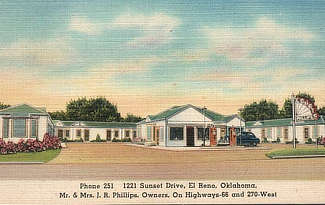 |
The Major Court - Oklahoma City |
Classen Cafeteria - Oklahoma City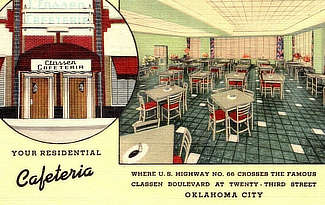 |
Will Rogers Motor Court - Tulsa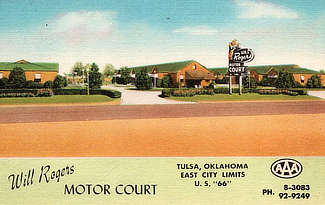 |
Scenes from the Past in Amarillo, Texas
Dowell's Saratoga Cafe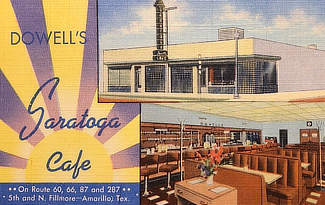 |
Sunset Motel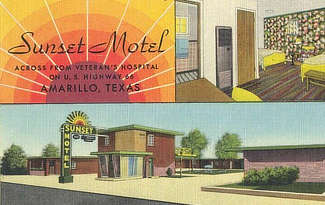 |
Bailey's Motel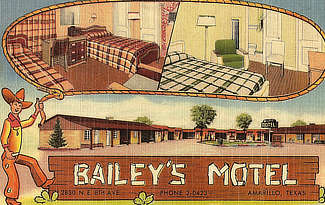 |
The Way Things Were in Santa Rosa
|
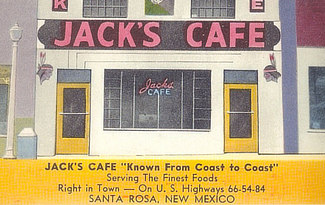
Vintage Views of Santa Fe, New Mexico
|
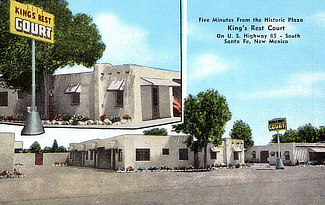
Albuquerque Memories
Tower Court |
Maisel's Trading Post |
Texas Ann Court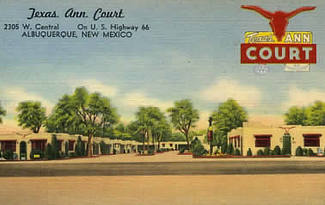 |
King's Rest Courts |
Crest-Hi Restaurant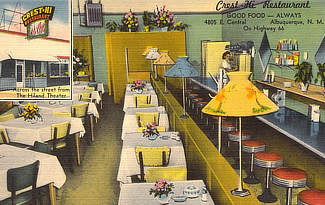 |
Arrowhead Lodge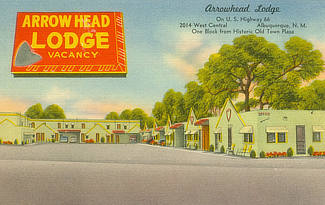 |
Images of the Past in Gallup
Pete's Cafe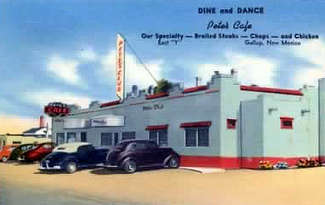 |
Casa Linda Court |
Log Cabin Lodge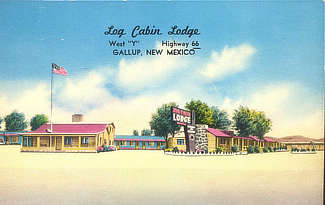 |
What was it like in Flagstaff?
Branding Iron Motel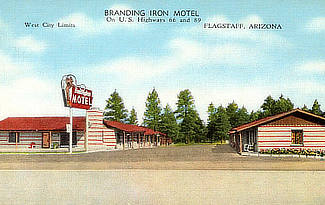 |
Lane Motel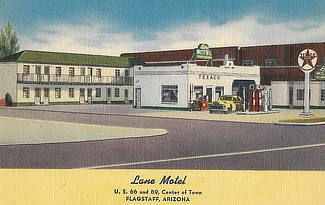 |
66 Motel Court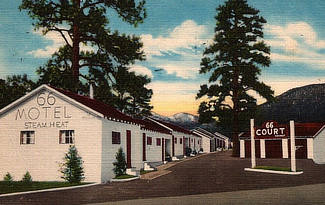 |
Early Days of Route 66 in Williams
|
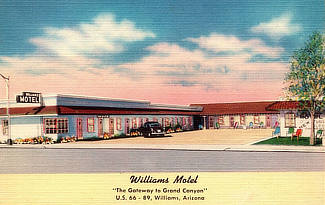
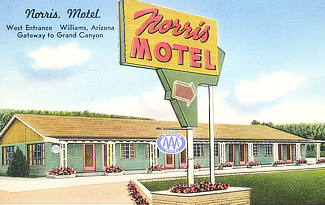

Bygone Days on Route 66 in Kingman
|

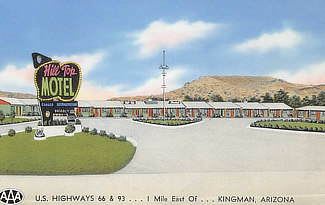
Scenes Along Route 66 in Needles
Del Rhea Lodge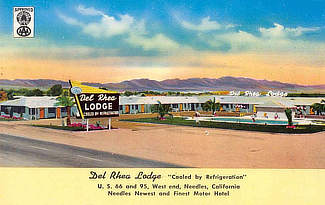 |
El Rancho in Needles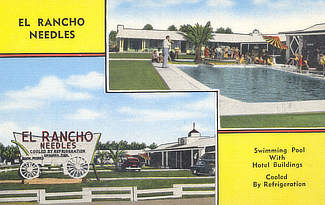 |
Swains Motel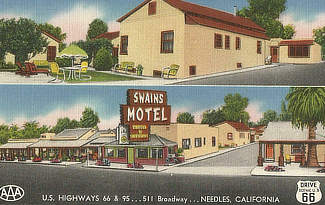 |
California Route 66 in Barstow
El Rancho Barstow |
Town & Country Motel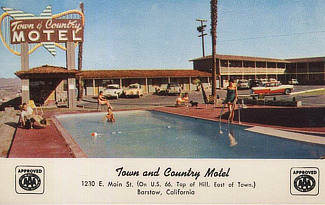 |
Cactus Motel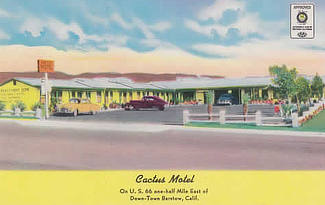 |
Earlier Days on Route 66 in San Bernardino
Motel 66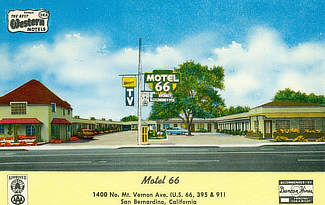 |
Mt. Vernon Auto Motel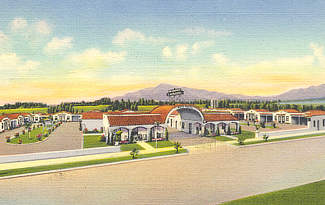 |
Mojave Motel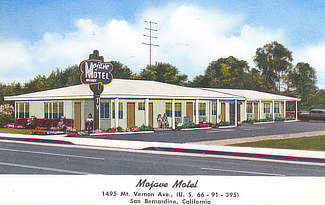 |
Stops on Route 66 in Pasadena, California in Earlier Times
Clark Motel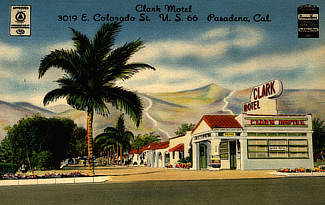 |
Arroyo-Seco Parkway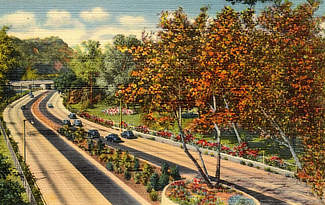 |
Downtown Pasadena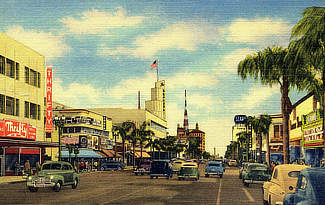 |
Gwinn's Restaurant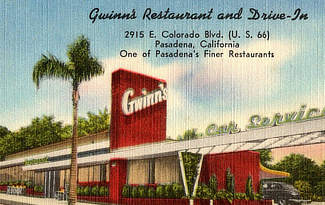 |
Grand Motel |
Bella Vista Motor Court |
Earlier Years on Route 66 in Santa Monica
Greetings from Santa Monica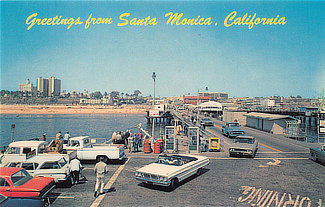 |
Santa Monica Auto Camp |
William Tell Motel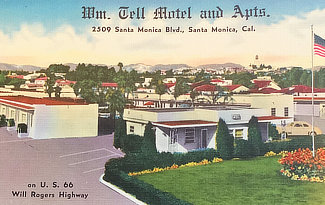 |
Bel Monica Motel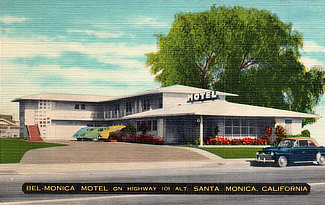 |
Santa Monica Travl-O-Tel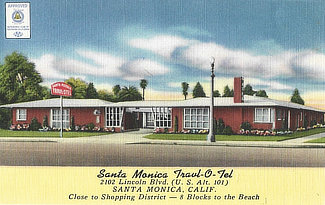 |
Surf Auto Hotel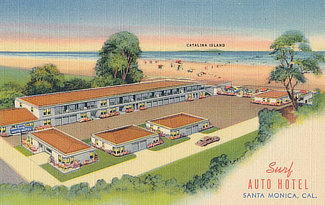 |